
OIB Solutions meets the ACPR to discuss agentic AI in insurance
On the morning of 12 November, the ACPR (Autorité de contrôle prudentiel et de résolution), the French supervisor for banking and insurance, welcomed us to discuss agentic AI in insurance.
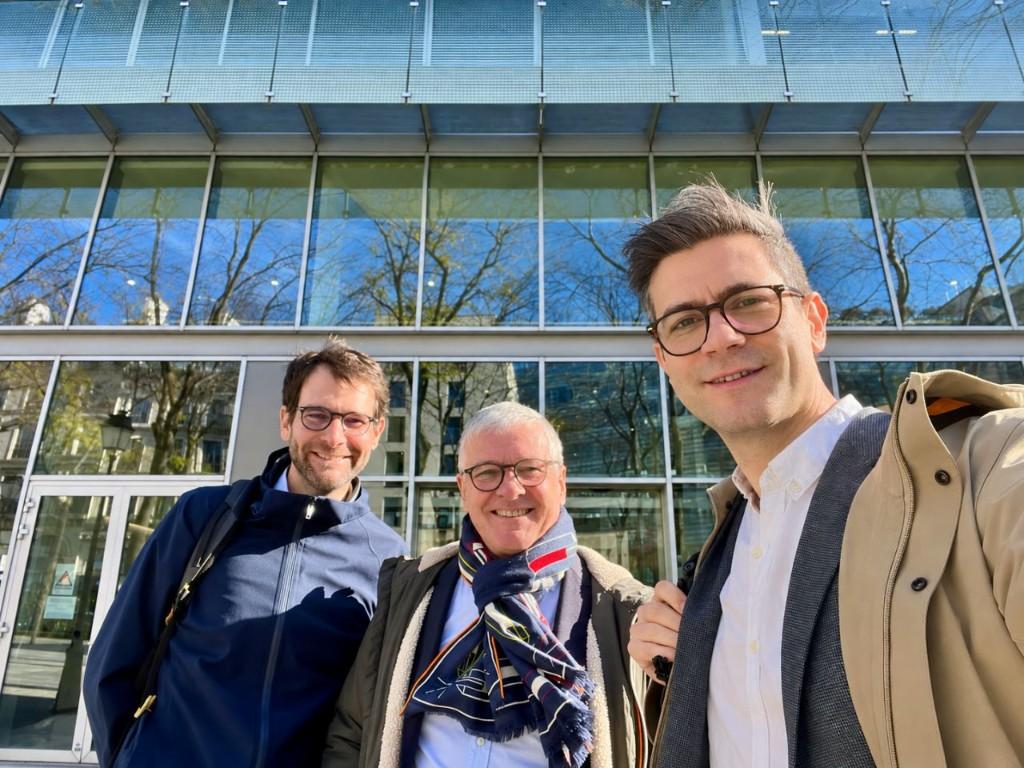
Around the table for OIB Solutions:
- David Dumont and Philippe Mangematin, co-founders;
- Cyrille de Montgolfier, member of our board.
The meeting was part of an exploratory review the Authority is conducting with expert players. Being consulted by the supervisor as specialists is strong recognition of the work done since OIB Solutions was founded.
Three topics on the agenda
1. Concrete use cases
We presented what our insurer, MGA and broker clients already run in production.
We distinguished three channels with very different risk profiles:
- The conversational assistant embedded in the distributor's website or extranet. The journey is guided, goes all the way to purchase and everything is recorded. It is a new interface more than a new channel.
- The app in ChatGPT or Claude. The insurer exposes its tools (information, pricing, quotes) through an MCP server. The main goal is visibility: being found by AI, not just by Google.
- Policyholders' personal AI agents (Muse, Dots, Claude Duet, Grok Bot). They compare, buy and cancel on the customer's behalf. Already widely adopted in the United States, they are reaching France.
We also presented our two-track approach:
- AI that guides the policyholder on simple products (home, motor);
- AI that assists the underwriter on more complex risks (commercial property, property damage).
2. Risk control
Three questions framed this part: controlling agents, tracing their decisions, and liability.
Our convictions:
- Price and cover stay deterministic. They are computed by the insurer's engine, never by the language model, which explains and advises within a fixed frame.
- An agent only does what it is allowed to do. Browsing, quoting, signing, paying, cancelling: each action carries a different commitment and must be opened, or not, deliberately.
- Binding actions are confirmed by the policyholder in person: signing, paying, cancelling.
- Traceability underpins everything else: which agent acted, on whose behalf, under which mandate, for which action.
We also shared the new risks raised by personal agents:
- unwanted purchases;
- duplicate cover;
- cancellations the policyholder is unaware of, with a risk of losing cover on compulsory insurance.
On claims and complaints, we expect agentic flooding: more numerous and better-argued requests, which insurers will need to answer with their own agents.
3. Regulatory outlook
The current framework already allows insurers to deploy well-controlled agents in-house. It says little, however, about customers' agents:
- their status under distribution rules;
- the validity of a signature or cancellation triggered by an agent;
- how liability is shared between the policyholder, the agent provider and the insurer.
We shared several ideas to foster innovation within a framework of trust:
- clarify liability, action by action;
- define what must not be opened to agents without direct confirmation from the policyholder;
- protect continuity of cover;
- set a traceability standard;
- create experimentation spaces bringing together insurers, distributors, software providers and AI platforms.
Our takeaway
Agentic AI is no longer a demo topic: it runs in production, and the real question is how to govern it intelligently.
That is exactly what we are building at OIB Solutions: a platform where codifiable intelligence goes into agents, judgement stays with humans, and every decision is traceable.
Our thanks to the ACPR teams for a rich and constructive discussion.